Skip to content

Combustion system design and modeling for conventional and alternative-fuel large bore engines
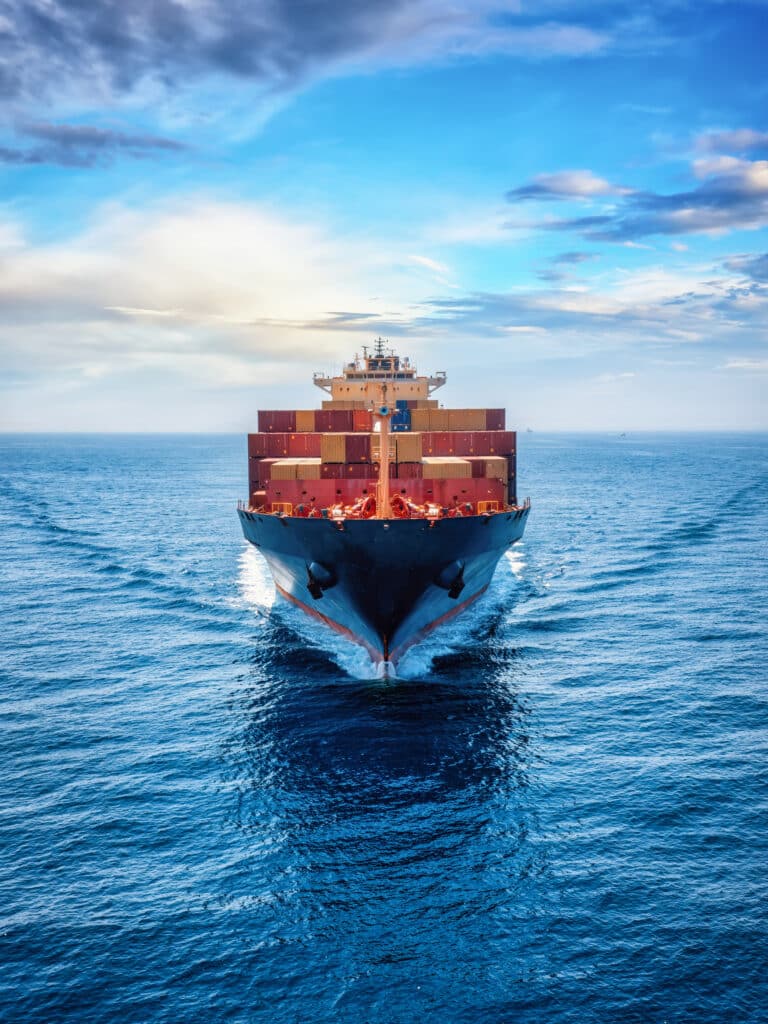
Alternative fuels don’t just change chemistry – they change everything. Knock behavior, ignition delay, charge stratification, thermal load distribution: parameters that were stable and well-understood on diesel become moving targets when you switch to ammonia, methanol, ethanol, natural gas or hydrogen. And the problem compounds when you’re working across multiple applications – marine propulsion, rail, and stationary power generation each impose different duty cycles, back-pressure constraints, and load transient requirements on the same combustion system.
Dumarey approaches this at system level. We develop and validate combustion kinetics models for both conventional and alternative fuels – including HVO drop-in optimization, methanol spark ignition, and ammonia dual-fuel concepts – and use those models to drive combustion bowl geometry, charge motion optimization, and ignition and injection strategies.
Conventional diesel and HFO combustion remain a substantial, active part of this work – not a legacy footnote. Efficiency, knock margin, and emissions improvement programs on existing platforms run in parallel with, and often help fund, the alternative-fuel development. The charging system architecture, including turbocharger matching, is defined in relation to what the combustion actually needs, not selected independently. Engine hardware upgrades go through virtual validation before any metal is cut. Diesel combustion improvement projects – for marine, rail, and power generation OEMs – follow the same integrated methodology, because the discipline of system-level development doesn’t change with the fuel.
Fuel conversion engineering: from diesel to methanol, ammonia, and hydrogen
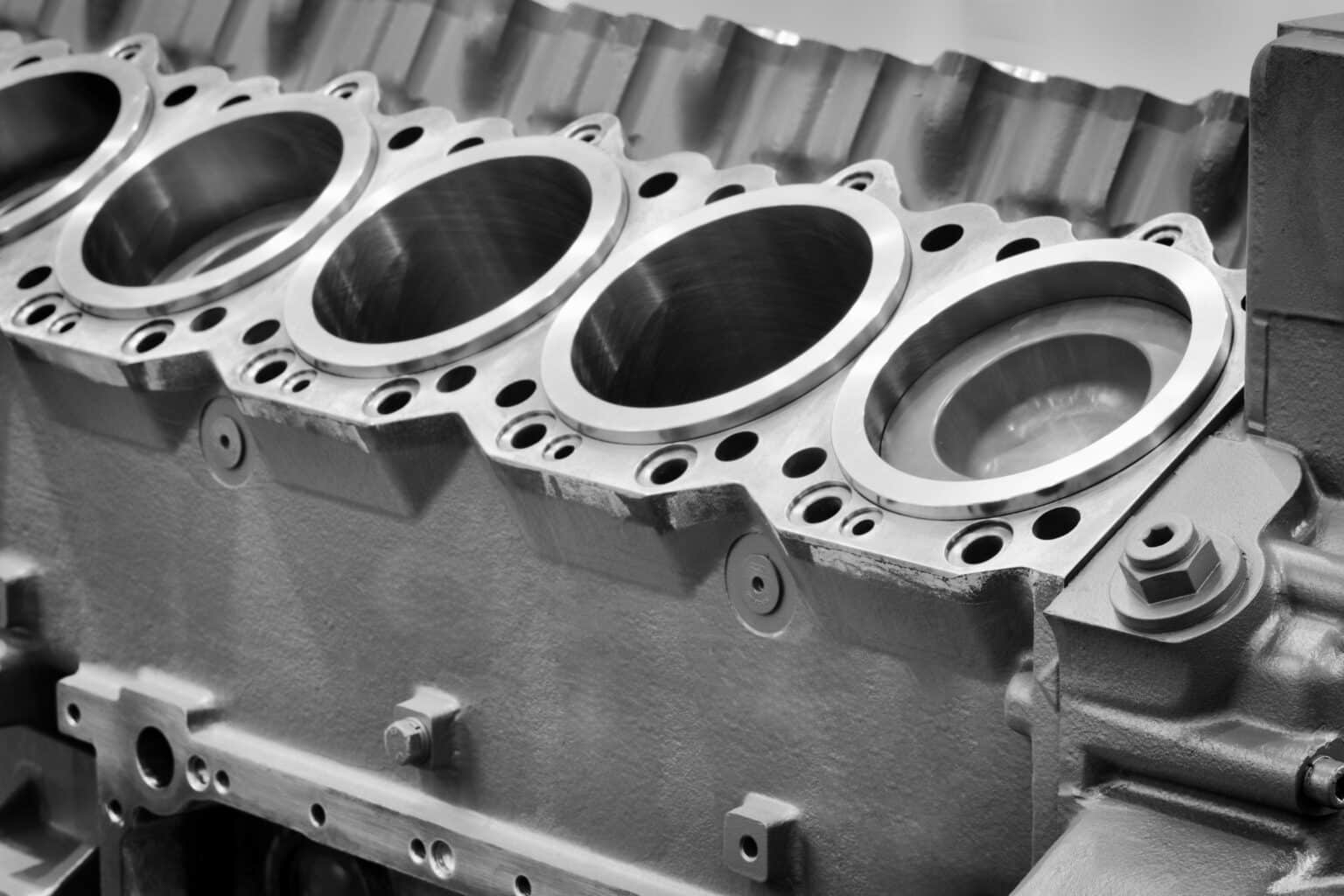
Engine conversion projects fail for a predictable reason: they are treated as substitution exercises rather than re-engineering programs. Swapping fuel doesn’t mean adapting a few injectors and recalibrating the ECU. It means revisiting ignition architecture, injection strategy, combustion bowl geometry, charge motion, thermal management, and aftertreatment – all at once, on a platform that was optimized for something else.
Dumarey has led conversion programs across the full spectrum of alternative fuels currently active in the marine sector: diesel to dual-fuel methanol direct injection, diesel to dual-fuel diesel DI / methanol PFI, and diesel to methane PFI spark ignition. Each of these conversions required rebuilding the combustion concept from the ground up within the constraints of the existing engine architecture.
In the ammonia space, Dumarey has contributed to dual-fuel ammonia combustion system development for marine propulsion within an industrial consortium – a fuel that introduces unique challenges around ignition stability, NOx formation, and combustion efficiency that cannot be addressed with conventional approaches.
In the Oil & Gas sector, fuel system conversion work has extended to high-pressure system upgrades with retrofit kits engineered to be compatible across diesel, HFO, and ammonia – a practical response to operators who need fuel flexibility without committing to a single pathway. For many of these operators, the most immediate need is still to extract more efficiency, reliability, or emissions margin from the diesel or HFO engines already in service while the alternative-fuel pathway matures – and that conventional optimization work sits squarely within Dumarey’s scope.
Mechanical, structural and lubrication engineering across the engine
Combustion strategy and aftertreatment architecture only deliver what they promise if the hardware underneath can survive them. Changing fuel changes peak pressures, thermal gradients, vibration signatures, and lubrication demands – which means combustion bowl geometry, charge motion, and emissions targets all run into mechanical and material limits long before they run into chemistry limits. Treating mechanical design, structural integrity, and lubrication as someone else’s problem downstream is how alternative-fuel programs discover cracked components, bearing wear, or NVH issues at the worst possible stage – after the combustion concept is already locked.
Dumarey’s large bore engineering scope is not limited to combustion, emissions, and controls. Mechanical and structural design – cylinder head and crankcase architecture, bearing systems, and component durability under the new load cases that alternative fuels introduce – is developed in parallel with the combustion system, supported by the structural, NVH, and CAE simulation capability built up across Dumarey’s wider propulsion engineering practice.
Lubrication is engineered with the same rigor: fuel compatibility, oil degradation under fuel-specific contamination – water ingress with hydrogen, acid formation with methanol or ammonia, deposit formation with HVO – and lubricant-hardware co-validation are addressed as part of the same development program, drawing on Dumarey’s ongoing engineering relationships with lubricant formulators. The result is an engine architecture engineered to support the combustion and emissions targets, not one that constrains them.

Active pre-chamber development for hydrogen, methanol, ethanol and natural gas engines
Pre-chamber ignition is not optional when you’re targeting high efficiency with lean-burn natural gas, hydrogen, or ammonia. It is also not trivial to get right. Passive pre-chambers extend the lean limit but introduce their own tradeoffs in part-load stability and cold-start behavior. Active pre-chambers give you more authority over ignition energy and timing, but the design space – geometry, scavenging, fuel metering – is large, the interactions are non-linear, and the performance envelope shifts significantly with fuel type and engine architecture.
Dumarey has developed proprietary active pre-chamber designs for alternative-fuel large bore applications across both 2-stroke and 4-stroke platforms. Work funded by the US Department of Energy has produced advanced pre-chamber concepts targeting zero methane slip in lean natural gas engines operating in Oil & Gas and marine applications – a problem that sits at the intersection of combustion efficiency and emissions compliance and cannot be solved by aftertreatment alone. Separate DOE-funded development has produced high specific output, high efficiency, ultra-low emissions pre-chamber concepts for hydrogen ICE in heavy-duty on- and off-road applications.
Dumarey has developed pre-chamber solutions for high-efficiency ethanol combustion for heavy-duty platforms, where the fuel’s high octane number and latent heat of vaporization create a distinct optimization space compared to gasoline or natural gas. In all cases, sub-component specification and system integration are handled as part of the same development program – the pre-chamber is part of your combustion system, not bolted onto it.

Aftertreatment system design for IMO Tier III and stationary emissions compliance
One of the most expensive decisions in large bore engine development is discovering that your aftertreatment architecture doesn’t work at the test bench stage. Methane slip in lean natural gas engines, NOx control in ammonia dual-fuel combustion, and PM management across variable load profiles all require the aftertreatment system to be designed in parallel with – not downstream of – the combustion system. Much of this challenge today is still diesel- and HFO-based, simply because that’s where the installed base and the nearest compliance deadlines sit – the same architecture-first discipline carries over as fuels change. The constraint applies equally to marine gensets facing IMO Tier III, stationary power generation assets under EPA or EU emissions regimes, and heavy-duty on-road engines navigating increasingly tight NOx limits.
Dumarey’s aftertreatment development starts with architecture definition and virtual performance assessment. System-level models are built and validated before hardware is specified, which means sub-component requirements carry realistic margin for actual operating conditions.
For natural gas engine applications – from genset to Oil & Gas to marine – Dumarey has developed and validated combustion and aftertreatment system models using innovative simulation methods specifically designed to reduce development effort on aftertreatment systems, including work on new methane oxidation catalyst formulations for lean large bore natural gas engines conducted in collaboration with the US Department of Energy.
Ammonia dual-fuel aftertreatment presents a different set of challenges – ammonia slip, N₂O formation, and the interaction between combustion tuning and catalyst performance – and Dumarey has active modeling and testing programs addressing exactly this problem space.

Engine control unit and calibration development for dual-fuel platforms
A controls architecture designed for a diesel engine will not simply adapt to a dual-fuel methanol or ammonia platform. Ignition timing strategies, fuel metering logic, lambda control under transient conditions, and fault management all need to be rethought from the ground up when you change the combustion concept. Integrating off-the-shelf controller hardware with software calibrated for a different combustion regime is a reliable source of calibration hours that never seem to end – and a common reason why alternative-fuel engine programs run over schedule.
Dumarey develops controller hardware and software in-house, specifically matched to the engine and fuel type it will operate on. Calibration support is not limited to the test cell: Dumarey provides on-site testing activity and calibration support at customer facilities and external test sites, including field test campaigns. The controls system and the engine are developed as one integrated program, which means calibration is a confirmation of what the model predicted, not a corrective process applied at the end. This in-house controls expertise isn’t exclusive to dual-fuel programs: the same team calibrates and supports conventional diesel and HFO control systems across the same range of applications – which is a large part of why the dual-fuel transition work is grounded in real operating experience rather than theoretical.

Large bore genset engineering for data centers, industrial microgrids, and emerging markets
The demand for reliable baseload and back-up power generation is growing faster than grid infrastructure in several key markets. Data centers, industrial microgrids, and regions where grid instability is structural rather than transitional all represent segments where large bore gensets – engineered for high efficiency, long service life, and low total cost of ownership – are seeing renewed relevance. The challenge is that the same emissions regulations driving change in marine and transportation are now reaching the stationary power sector, and genset platforms designed for diesel are not ready for that transition without substantive re-engineering. That re-engineering runs alongside, not instead of, continued investment in conventional diesel genset performance: the transition is gradual, and diesel platforms will remain the backbone of operating fleets for years to come.
Dumarey supports genset OEMs through this transition with the same system-level approach applied to marine and transportation platforms: combustion system redesign for alternative fuels, mechanical and lubrication engineering for the new operating conditions alternative fuels introduce, aftertreatment modeling and architecture definition, controls development, and certification support for the applicable regulatory frameworks. The integration of hybrid architectures – battery storage, load management systems, and engine controls working as a coordinated system – is increasingly part of this work, as operators seek to optimize part-load efficiency and reduce transient emissions without sacrificing dispatch reliability.

Regulatory requirements and certification support for large bore engine OEMs
Certification is not the final step – it is a constraint that shapes every engineering decision before it. IMO Tier III, EPA and CARB stationary emissions standards, EU Stage V off-road requirements: the specific thresholds differ by application, jurisdiction and fuel type, but the core challenge is identical. Translating regulatory text into engineering specifications early enough to actually influence the design is what separates programs that certify on schedule from those that require expensive late-stage rework.
Dumarey provides regulatory requirements definition and full certification support, with the technical depth to translate compliance requirements directly into combustion system, mechanical and durability, aftertreatment, and controls specifications. Project and supplier management capability covers the complete development chain – from technology scouting through serial production readiness and supplier quality assurance – so that the path from engineering development to certified product is managed as a single program rather than a sequence of handoffs.

Why Choose Dumarey?
- Expertise: Years of experience in system integration for hydrogen solutions.
- Innovation: Continuous development of cutting-edge hydrogen integration
- Sustainability: Dedication to providing eco-friendly energy solutions.
Partnering with Dumarey ensures access to top-tier services and support in the realm of hydrogen energy.
Our products & services
Injectors and fuel rails systems manufacturer
Electronic control units supplier
Our expertise spans the entire product industrialisation cycle. We use the ASPICE standards to ensure a seamless journey, from defining your requirements to serial production.
We design our software and hardware following the strictest cybersecurity and functional safety standards.
Hardware engineering for propulsion systems
Testing and laboratory services
- Integrity
- Creativity
- Partnership
- Excellence
- Entrepreneurship
- Integrity
- Creativity
- Partnership
- Excellence
- Entrepreneurship
Need advanced hydrogen solutions
for your next project?
Customers
For over 40 years, we’ve applied our expertise to develop high-quality projects.
Thanks to our history and experience, we understand the value of building strong relationships with our customers.