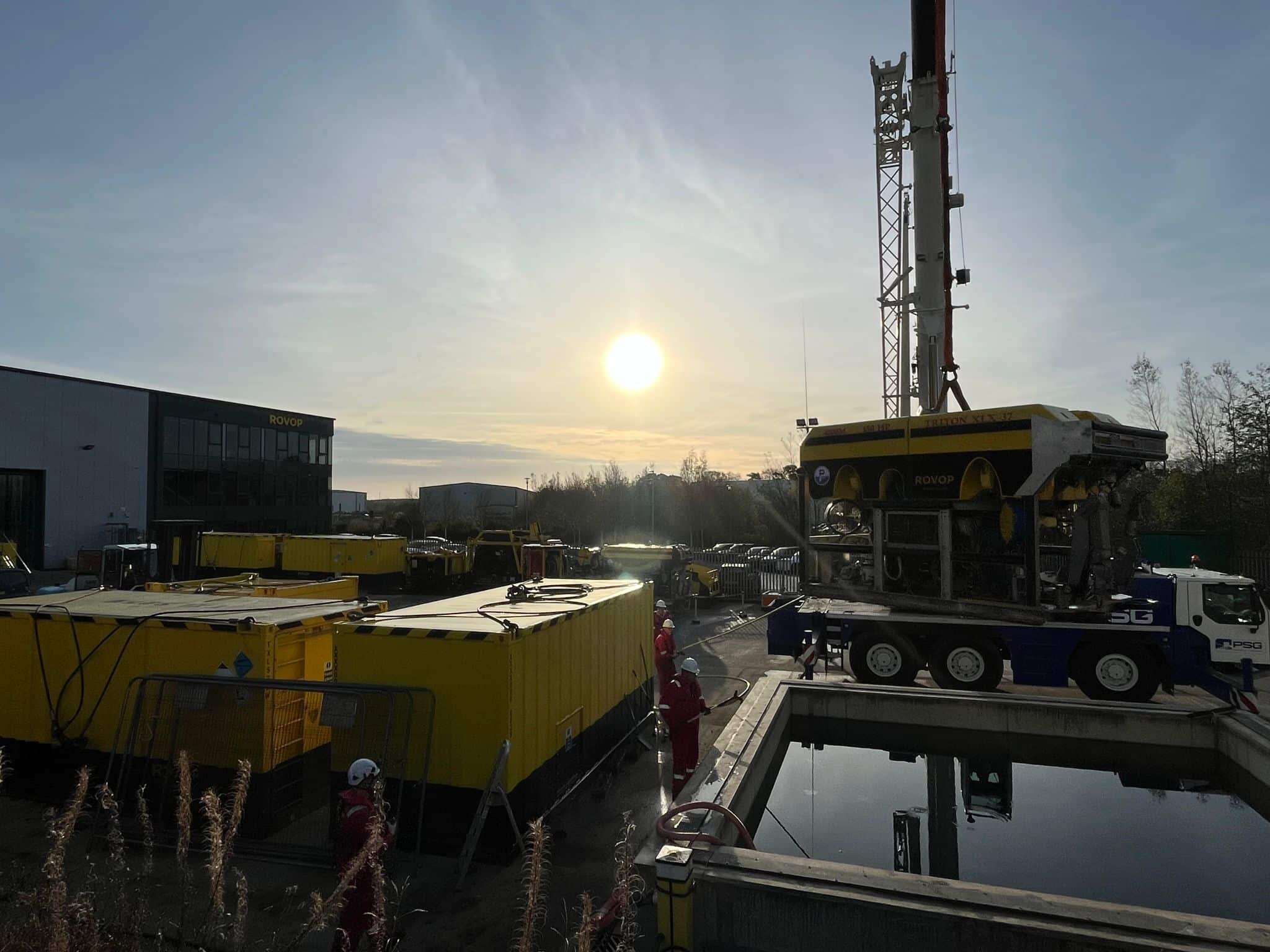
The Peak Power 200 flywheel allowed a diesel generator powering a remote underwater vehicle to be downsized, resulting in fuel, cost and emissions savings.
Clients:
Genny Hire and ROVOP
Industries:
Applications:
By downsizing the required diesel generator, the Peak Power 200 helped save 332 litres of diesel, and prevent over 850kg of CO₂ emissions each week.
Remotely operated underwater vehicles, or ROVs, allow companies to explore the depths of the ocean without sending divers. ROVs are used across many sectors, including hydrocarbons, offshore wind, telecoms and scientific exploration. Modern ROVs are equipped with a suite of sensors and tools allowing them to record and manipulate their local environment.
Large ROVs are powered either by a vessel power, of by using a diesel generator on board a support ship, with power being transmitted down an umbilical cable. In this case study, the ROV used was a Forum XLX ROV provided by ROVOP with power provided by Genny Hire. The power profile of large ROVs is dynamic, with significant spikes in power being required to start the 150hp hydraulic power unit (HPU) responsible for propelling the craft. In addition to the HPU, power is also required for the control and launching systems.
The Peak Power 200 from Dumarey Green Power is a flywheel energy storage system. The flywheel provides a short bust of power, as well as power factor correction. This combination allows generators to be downsized, saving end users money and cutting CO₂ emissions.
In this study, Genny Hire deployed a Peak Power 200 flywheel alongside a 500kVA generator to power the ROV and all associated equipment, as part of onshore testing of the ROV before deployment. The flywheel rapidly delivers spikes of up to 186 amps, assisting the generator when necessary, and allowing the deployment of a smaller more efficient power unit.
In common with many systems made for the oil and gas industry, the ROV runs on 440-460V at 60Hz, rather than more typical European power specification. The Peak Power 200 is able to switch between the two voltages, allowing for seamless deployment.
Downsizing the generator saved the user a calculated 322 litres of diesel per 50-hour working week compared to the standard solution. This represents and annual CO₂ cut of approximately 43 tonnes. Financially, the end user saved money on generator rental as well as on fuel and fuel delivery costs. This is the first case report of using a flywheel system to reduce emissions on an ROV. Wider adoption of the technology will assist the industry in driving down emissions, helping operators hit their ESG goals.
Dumarey Green Power would like to thank the teams from Genny Hire and ROVOP the global ROV specialists for making this case study possible.

Flywheel Energy Storage System, capable of 186A of peak power

Smaller generators use less fuel, cutting costs and emissions

The smaller power system saved on space, critical in offshore operations
litres of diesel saved per year
tonnes of CO₂ avoided each year
million cycles, the design life of the system
Share on
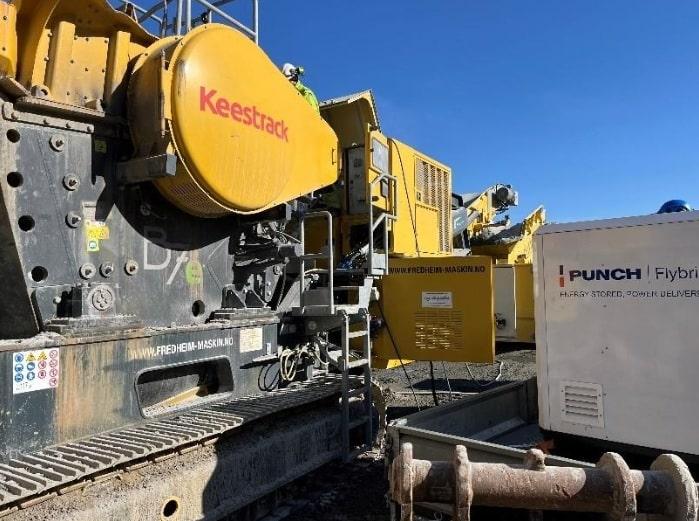
Dumarey deployed a Peak Power 200 flywheel system on a hybrid jaw crusher to enable generator downsizing and load levelling, reducing fuel consumption, emissions, and equipment stress.
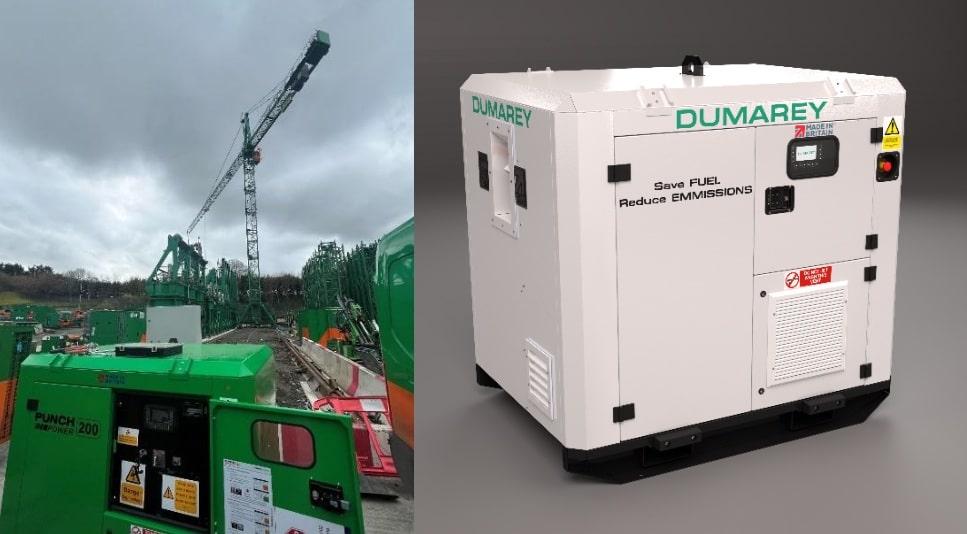
Dumarey deployed a Peak Power 200 flywheel system on a tower crane to enable significant generator downsizing, reducing fuel consumption, operating costs, and emissions.
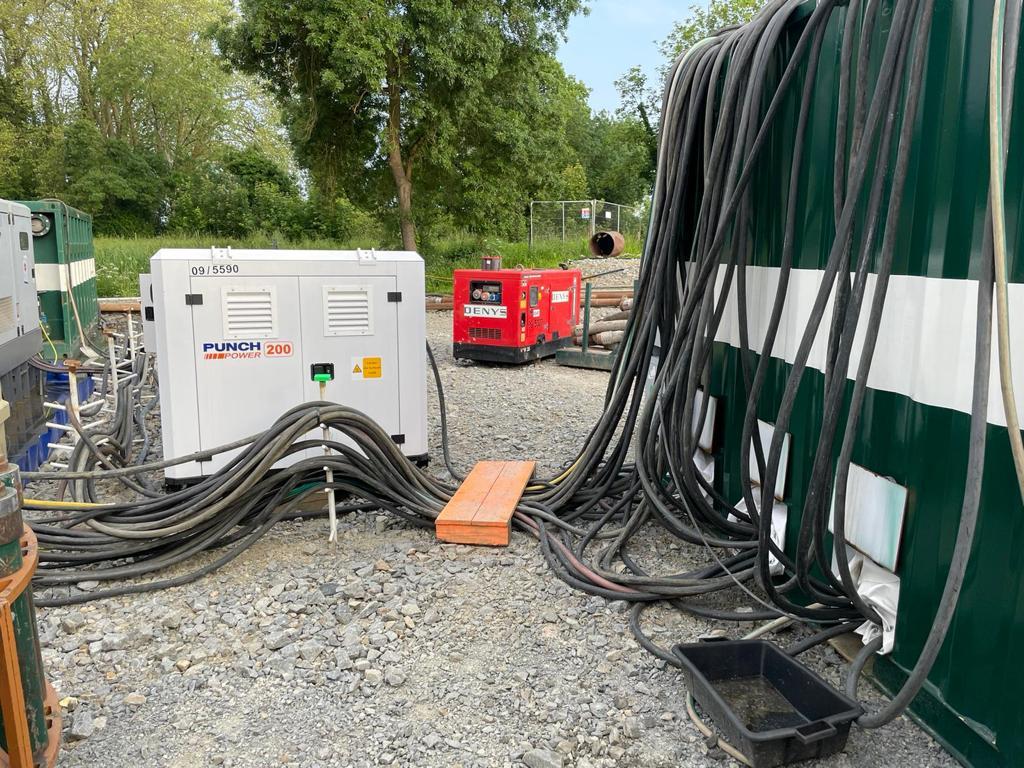
Dumarey supplied Locquet Power and Light together with Power Solutions a flywheel system which allowed them to downsize on generators significantly.
Dumarey deployed a Peak Power 200 flywheel system alongside an industrial shredder to enable generator downsizing, reducing fuel consumption, costs, and emissions.
The Peak Power 200 flywheel enabled a WOLFF tower crane at Dubai Harbour to run on a downsized 200kVA generator instead of a 500kVA diesel unit – delivering significant fuel and emissions savings even in extreme heat conditions where battery systems struggle.
Error: Contact form not found.